A nourished Masi starts with its young people
What would it take for every child in Masiphumelele to eat well, for fresh vegetables to be affordable, and for neglected dumping sites to become productive green spaces?
For young people in this Cape Town community, the answers are clear. But achieving that future will require more than access to food. It will take education, jobs, safer public spaces and a willingness to take collective action.
These were among the messages to emerge from a youth dialogue hosted by the Southern Africa Food Lab (SAFL) and Masi Creative Hub on 15 October, in recognition of World Food Day 2026 and its theme, Innovate Today, Nourish Tomorrow.
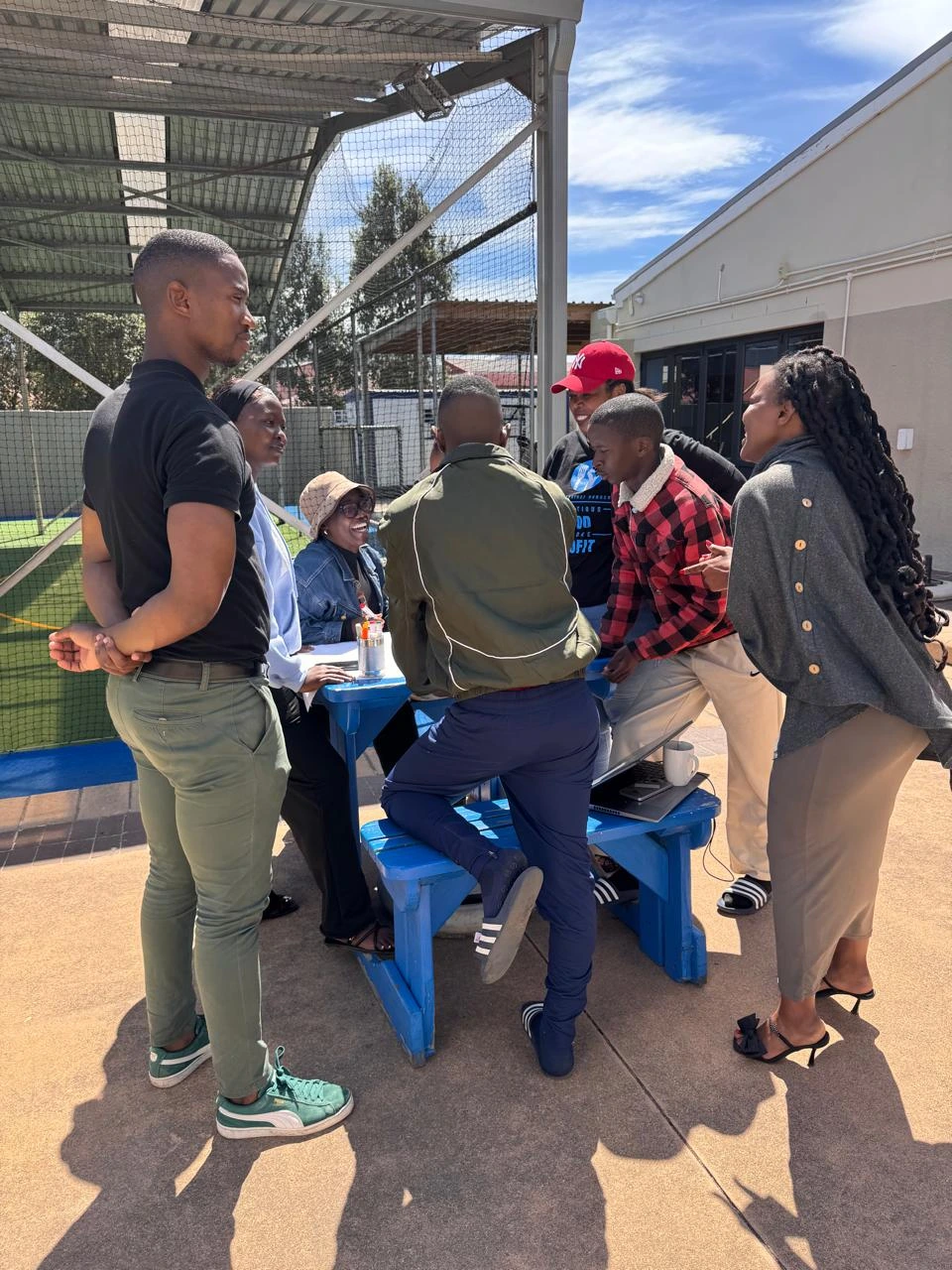
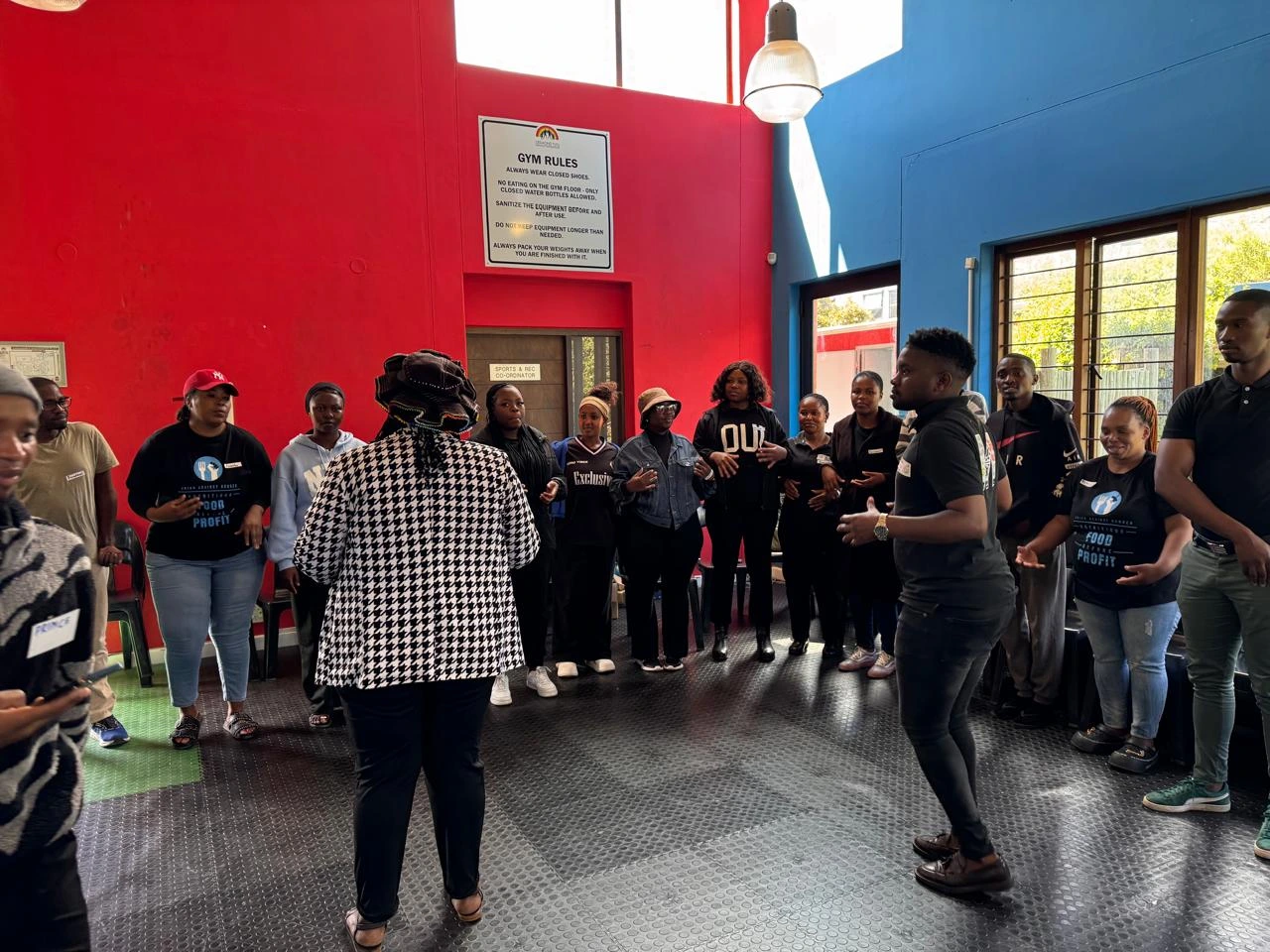
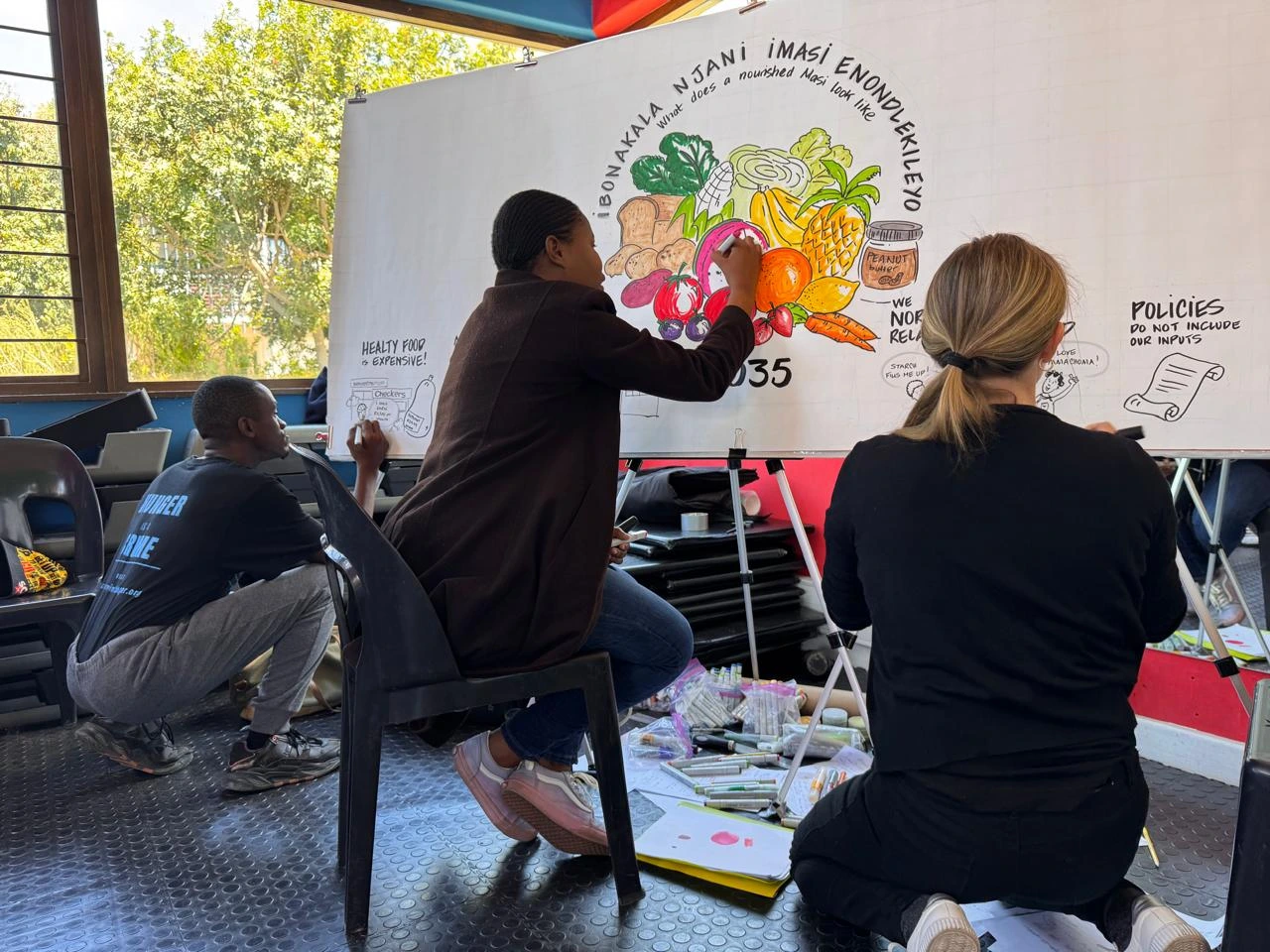
Twenty-six young people aged 18 to 30 gathered at Desmond Tutu Mpilo Health Park to imagine what a nourished Masiphumelele, widely known as Masi, could look like in 2035. Through conversations in isiXhosa and English, they explored the realities of food and nutrition in their community before developing a shared vision for change.
Their message was both hopeful and uncompromising: young people understand many of the challenges facing their community, and they want to be part of the solution.
"If you want the change you must make the change in yourself," one young woman said.
When being fed is not the same as being nourished
Participants identified the cost of healthy food as a major barrier, pointing out that starchy staples are often more affordable than fresh vegetables.
"Starchy food is cheaper than fresh vegetables," one participant observed.
They also questioned whether existing food support adequately meets nutritional needs, noting that food donated to schools does not always reflect what children want to eat or what they need to thrive.
Beyond affordability, young people discussed how eating habits develop in childhood and continue into adulthood. They spoke about diets high in salt and sugar, the use of food as a reward, and the need for accessible, practical nutrition education.
The conversation revealed an important tension: participants demonstrated considerable awareness of nutrition and the challenges facing their community, yet identified access to information and affordable healthy food as ongoing barriers.
As one participant put it, "Children are fed, but they are not nourished."
Imagining a different Masi
When participants turned their attention to 2035, their vision extended well beyond individual diets.
They imagined schools with food gardens maintained by learners, with produce contributing to school feeding schemes. They pictured a thriving Masi Food Lab where community members could learn about growing and preparing food, while developing skills and creating employment opportunities.
One of the most striking ideas was to transform illegal dumping sites into productive gardens and green corridors.
Spaces currently associated with waste could instead provide places to grow food, improve the local environment and bring residents together.
Participants also connected food security to wider questions of health, dignity and opportunity. Their vision included safer streets, access to sports facilities, greater gender equality and stronger support for physical and mental wellbeing.
Jobs were central to this future. Young people imagined establishing businesses in fields ranging from food production to clothing design, alongside opportunities in coaching, counselling and event management.
Across the groups, four priorities emerged: affordable fresh food close to home; better nutrition knowledge; employment and local enterprise; and more spaces for community and household food production.
Together, these ideas reflect a broader understanding of nourishment. A healthy food future depends not only on what people eat, but also on their access to knowledge, livelihoods, safe environments and opportunities to participate in decisions that affect their lives.
From vision to action!
The dialogue was not intended to end with a picture of an ideal future. Participants identified practical steps they could begin taking now.
The first was to reclaim community green spaces by challenging illegal dumping and helping transform neglected areas into places for planting and community use.
The second was civic participation. Yandi, who facilitated the dialogue alongside Lwando from Masi Creative Hub, encouraged young people to vote in the local government elections scheduled for 4 November 2026. She challenged the idea that not voting is a neutral act, pointing out that it leaves others to determine the outcome.
The third was to make greater use of opportunities already available through Masi Creative Hub, including its courses and activities, to develop skills and participate in community initiatives.
These actions may seem modest compared with the scale of the challenges discussed. But they represent a shift from identifying what is missing to recognising where young people can exercise agency and begin making a difference.
"No one is coming to save you, young people," was one observation during the discussion. The call that closed the session was more energising: "Youth, let's take charge!"
Building a nourished future together
The dialogue supports Masi Creative Hub's ambition to ensure that young people's perspectives inform food and nutrition decisions in the community, with the longer-term goal of seeing at least one youth-supported initiative underway within 12 months.
For SAFL, the conversation reinforced the importance of starting with the knowledge, experiences and aspirations of the people most affected by food insecurity. The young people in the room were not short of ideas. Their vision connected food with education, livelihoods, environmental care and community leadership.
Realising that vision will require sustained effort and collaboration. But the starting point is already there: young people who can describe the future they want and identify actions they can take towards it.
A nourished Masi in 2035 may still be a decade away. The work of building it, these young people made clear, starts now.
View the full report here.