
Future Imaginaries
Building food and nutrition systems that work for everyone starts with being able to imagine them.
Creating a more inclusive, equitable and sustainable food system requires us to imagine alternatives to the systems we have today. Yet when existing ways of producing, distributing and consuming food are deeply embedded in our economies and societies, imagining something fundamentally different can be difficult.
The Southern Africa Food Lab uses foresight methodologies and participatory visioning as part of its wider social dialogue approach. These processes bring together people with different experiences, perspectives and interests to explore possible futures, challenge existing assumptions and develop shared visions for change.
The scale of transformation needed, alongside the urgency of addressing socio-economic inequalities and environmental pressures, calls for more than incremental improvements. It requires us to imagine fundamentally different futures and build the collective capacity to work towards them.
Imagining transformative futures
Foresight is about looking beyond current circumstances to explore what could be possible. It helps people recognise that the future is not predetermined, and that the choices and actions we take today shape the systems we will inherit tomorrow.
For the Food Lab, this means creating deliberative processes in which diverse stakeholders can engage with complexity, draw on different knowledge systems and develop a shared understanding of the changes needed.
Our work uses foresight and participatory visioning to:

Strengthen transformative thinking
Build people's capacity to look beyond existing assumptions and imagine alternatives to current systems.

Create shared goals
Bring diverse stakeholders together around a common vision of a more inclusive and sustainable food future.

Strengthen agency
Stimulate the confidence and capacity of people and communities with less structural power to influence the systems that shape their lives.
Imagining shared futures also builds relationships, trust and common purpose. These provide a foundation for the Food Lab's wider social dialogue processes, which help translate shared understanding into action.
Part of our story
Imagining alternative futures has been part of the Southern Africa Food Lab's story from its earliest days.
Established in 2009 through a multi-stakeholder process, the Food Lab was founded on the recognition that transforming the food system requires more than understanding the challenges we face. It requires fresh thinking about what is possible, a shared vision of what we want to achieve, and collective action to bring about change.
This commitment found expression in the Food Lab's Transformative Scenario Planning process, which brought together nearly 50 people from across South Africa's food system to explore possible futures for food by 2030. The four scenarios, launched in 2015, challenged participants to look beyond existing assumptions, consider how different futures might unfold and ask what they could do together to shape a more desirable outcome.
The process reflected a conviction that continues to underpin the Food Lab's work today: the future is not predetermined. By creating spaces for diverse voices to imagine, question and shape what is possible, we can build the shared understanding and collective agency needed for transformative change.
Tools for imagining change
Today the Food Lab draws on a range of foresight methodologies and facilitation approaches to help people understand complex systems, explore alternative futures and identify opportunities for transformation.
Three Horizons
The Three Horizons framework (developed by Bill Sharpe and the International Futures Forum) helps participants explore how systems change over time.
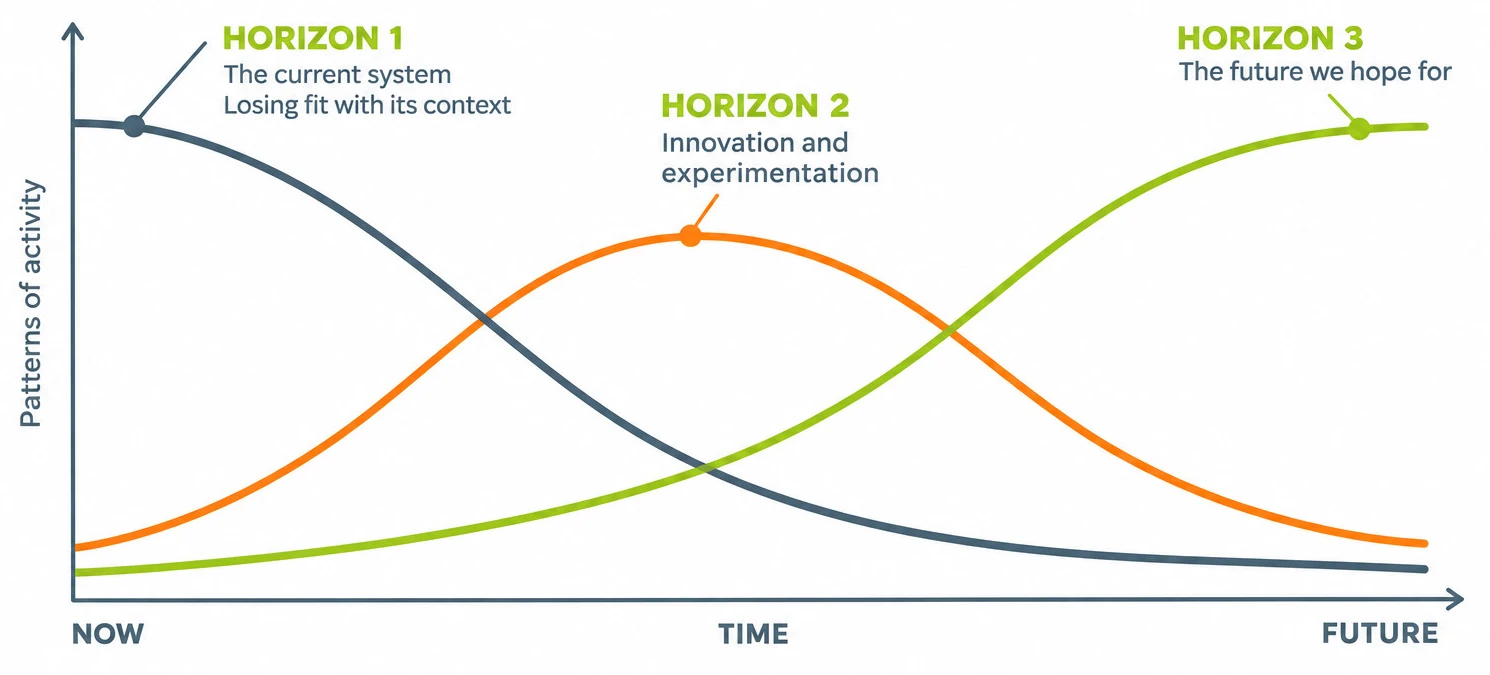
It considers three overlapping horizons:
HORIZON 1
The current system, and the ways in which it is increasingly losing fit with its context.
HORIZON 2
The space of innovation and experimentation, where new ideas and approaches emerge.
HORIZON 3
The future we hope to create, representing a more desirable way of organising our food and nutrition systems.
Used as a participatory process, the framework brings people with different experiences and expertise together to examine their understanding of the present, imagine alternative futures and identify the changes that could help bridge the gap between the two.

Horizon stories
The Food Lab has extended the Three Horizons process through the use of horizon stories.
If Horizon 3 represents stories about the future we want to create, horizon stories also help us imagine the critical transitions that could take us there. They explore the ideas, experiments and actions that can move us away from an increasingly unsustainable present and towards new possibilities.
Storytelling has become an important part of this process, helping participants articulate what change could look like and identify the role they might play in bringing it about.


Living Labs
A Living Lab is an approach that brings together diverse stakeholders to explore complex challenges, develop a shared understanding and envision more desirable futures.
Through a series of regular interactions, participants move beyond individual perspectives to consider the food system as a whole. They develop empathy for different experiences and interests, recognise the interconnected nature of social and natural systems, and identify opportunities for innovation and change.
The process helps participants:
- Understand the food system through a wider range of perspectives.
- Recognise the needs and experiences of stakeholders who are often overlooked or have less influence.
- Develop a shared vision of a more desirable future.
- Identify opportunities, innovations and practical interventions that can help bring that future about.
Future imaginaries in practice
The Food Lab uses foresight and participatory visioning in a range of contexts, working with communities and stakeholders to imagine and shape alternative food futures.

Woza Nami, eThekwini
In the peri-urban areas of eThekwini, KwaZulu-Natal, the Woza Nami initiative used the Three Horizons framework as part of a multi-stakeholder strategic training process. Farmers, government representatives and civil society organisations worked together to explore the current food system, develop a shared vision and identify opportunities for change.
The process demonstrated the value of equipping communities with the tools to participate meaningfully in shaping their food futures.
Nourished Communities, Masiphumelele
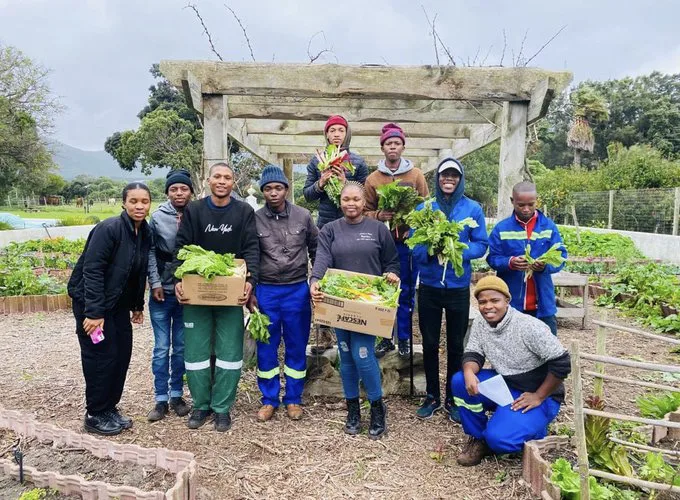
Working with the Masiphumelele Creative Hub in Cape Town, the Food Lab has supported community visioning processes exploring what a better future could look like.
Through these processes, community members and young people have been able to articulate their hopes for a nourished, safe and flourishing community, and consider the opportunities and changes needed to achieve that vision.
From imagining to action
Imagining a different future is only the beginning. Transformative change requires people to recognise their collective agency, build relationships across different interests and work together to create new possibilities.
Foresight and participatory visioning help create the shared understanding, trust and common purpose needed to move towards those possibilities. They are one part of the Food Lab's wider commitment to supporting the dialogue, collaboration and experimentation needed to transform food and nutrition systems.